Casas Adobes Artificial Turf Pros
Desert-Adapted Turf Installs in Casas Adobes, AZ
Desert-adapted turf installs in Casas Adobes, AZ using UV-stabilized fiber and heat-reducing infill for Arizona summers, free estimates.
- 15+ Years local experience
- 500+ Projects completed
- Licensed & Insured
Serving Casas Adobes and nearby communities.
Standard turf bought off a generic listing isn't rated for Casas Adobes summers. Surface temperatures on unrated turf can climb well past what's comfortable to walk on barefoot, and cheaper fiber fades and goes brittle faster under sustained Arizona UV exposure. Casas Adobes Artificial Turf Pros sources turf fiber and infill specifically chosen for high-heat, high-UV climates rather than installing whatever product is cheapest to ship.
This isn't an add-on, it's a different starting point: fiber type, infill composition, and backing material are all selected around how hot your yard actually gets, not a national average spec sheet. A product built for a Phoenix-area summer behaves differently under direct Arizona sun than turf designed for a milder climate, and that difference shows up in year three when cheaper fiber starts splitting at the tip or the backing starts to curl at the edges.
What's included
What's included
- Typically included — UV-stabilized turf fiber selection, heat-reducing infill, base prep matched to sun exposure, standard seaming and edging.
- Optional — Shaded-zone fiber adjustments for yards with mixed sun and tree cover, upgraded infill density for south- and west-facing exposures.
- Customer prep — Clear the install area of furniture, planters, and hoses so the crew can grade and compact without working around obstacles.
Want a clearer scope?
Get a Free EstimateTimeline
How long does a desert-adapted turf install take?
Most desert-adapted jobs move on the same general schedule as a standard turf install, the difference is in product selection, not labor time.
- 01
Consult and product selection
same daywe walk the yard and pick fiber and infill suited to its sun exposure.
- 02
Base prep
1 daygrading and compaction sized to the yard.
- 03
Turf install and seaming
2 days1 to , depending on yard size and number of seams.
- 04
Final cooling check
same daysurface temperature is checked under direct sun before we wrap up.
Need a schedule that fits?
Get a Free EstimateCodes & permits
Permits and codes for desert-adapted turf installs
Casas Adobes is unincorporated, so permit questions route through Pima County rather than a city building department. Confirm with the county or your HOA before work starts if your project touches drainage or grading.
| Typically needs a permit | Often no permit |
|---|---|
| Projects that change drainage routing or property grading beyond minor leveling | Turf product swap or fiber upgrade with no grading change |
| Work tied to a larger landscape renovation that already requires county review | Standard residential turf install on an already-graded yard |
Need help with permits?
Get a Free EstimateDIY vs pro
DIY vs hiring a pro for desert-adapted turf installs
| DIY | Hire a pro |
|---|---|
| Fine for small accent areas where heat performance isn't a major concern. | Access to turf fiber and infill lines built specifically for high-heat, high-UV climates. |
| Big-box turf kits rarely specify UV rating or heat-reduction infill, so performance is a gamble. | Base prep matched to sun exposure, not a generic layer under every yard. |
| Mistakes in infill selection are expensive to fix later since the whole surface has to come up. | One company accountable if the surface runs hotter than expected after install. |
Not sure DIY vs pro?
Get a Free EstimateWhen to call
When to call for desert-adapted turf installs
Call Casas Adobes Artificial Turf Pros for a free estimate and we'll walk the yard, check sun exposure, and recommend fiber and infill built for the heat your property actually sees.
- Existing turf is too hot to walk on barefoon by mid-morning in summer.
- Turf fiber has started to fade, flatten, or go brittle after a couple of Arizona summers.
- You're planning a new install and want the right product picked up front instead of guessing.
Seeing warning signs?
Get a Free EstimateFAQs
Desert-Adapted Turf Installs FAQs
Does artificial turf get too hot to walk on in Tucson summers?
Unrated turf can get uncomfortably hot in direct sun. Heat-reducing infill and UV-stabilized fiber bring surface temperatures down meaningfully compared to standard product, though no turf stays cool to the touch in peak afternoon sun.
How long does desert-adapted turf actually last in Arizona heat?
UV-stabilized fiber and proper infill extend usable lifespan well beyond standard turf, since the fiber resists fading and brittleness from sustained sun exposure. Exact lifespan depends on sun exposure, foot traffic, and maintenance.
Is desert-adapted turf more expensive than standard turf?
There's typically a modest premium for UV-stabilized fiber and heat-reducing infill compared to standard product, reflected in the per-square-foot estimate we provide after walking your yard.
Do I need a permit for a desert-adapted turf install?
Most installs don't require a permit since it's a product and infill choice rather than a grading change. Projects that alter drainage or property grading may need Pima County review.
Can I upgrade existing turf to heat-reducing infill without a full reinstall?
In some cases infill can be refreshed without pulling up the turf, but it depends on the current backing and base condition. We check this during the estimate visit.
How it works
Our process
 Step 1
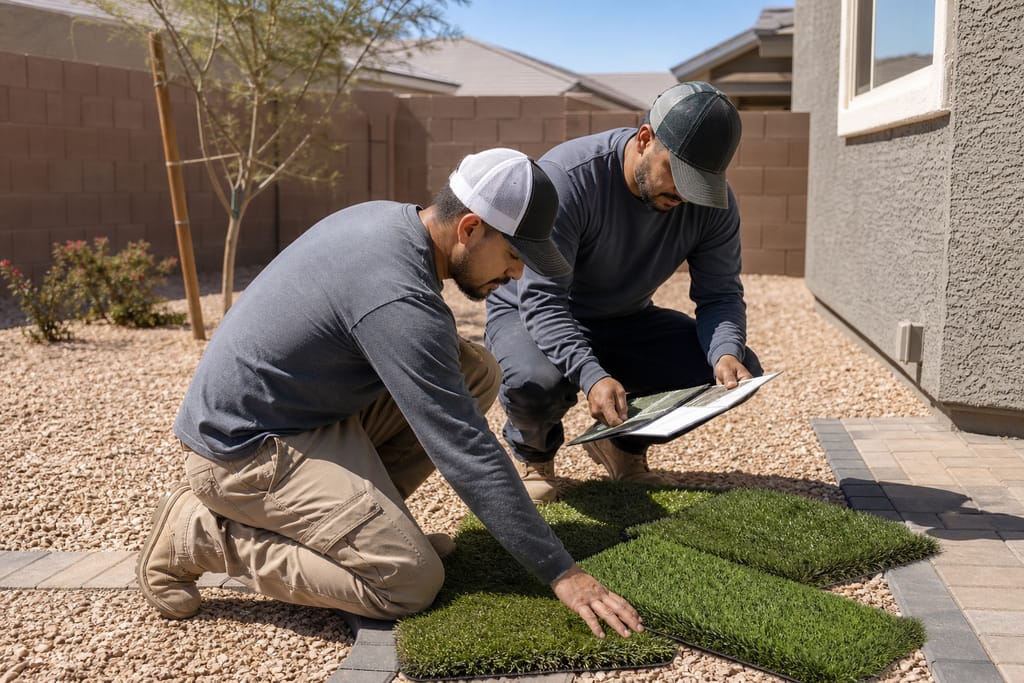
Heat tolerance planning
Turf products are selected based on resistance to high heat and intense sun exposure.
 Step 2
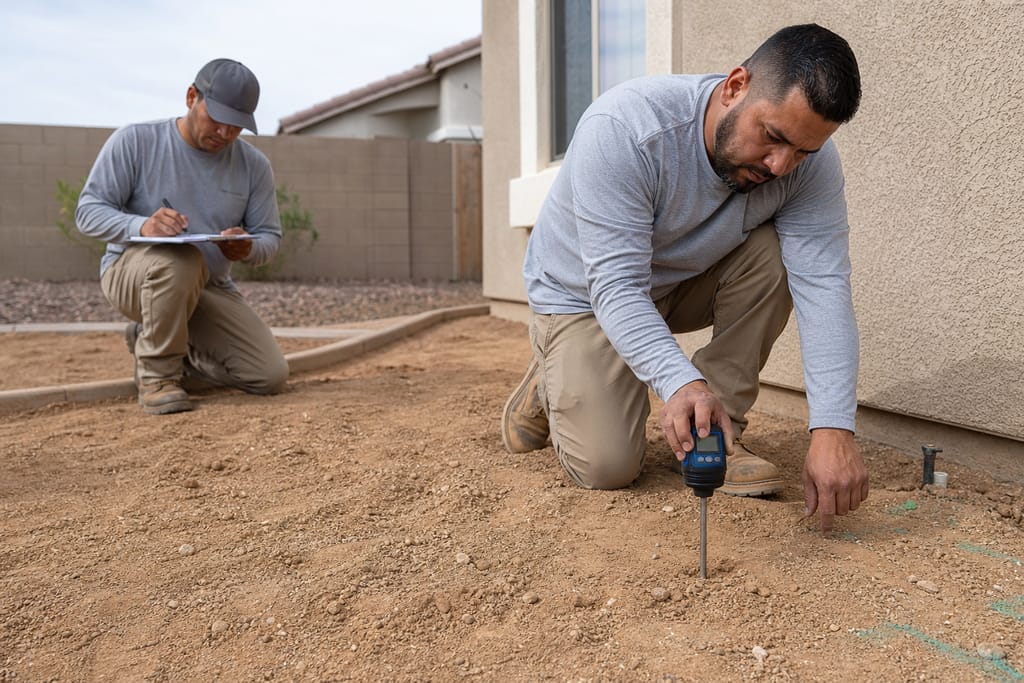
Soil moisture testing
Existing soil conditions are tested to plan appropriate drainage solutions.
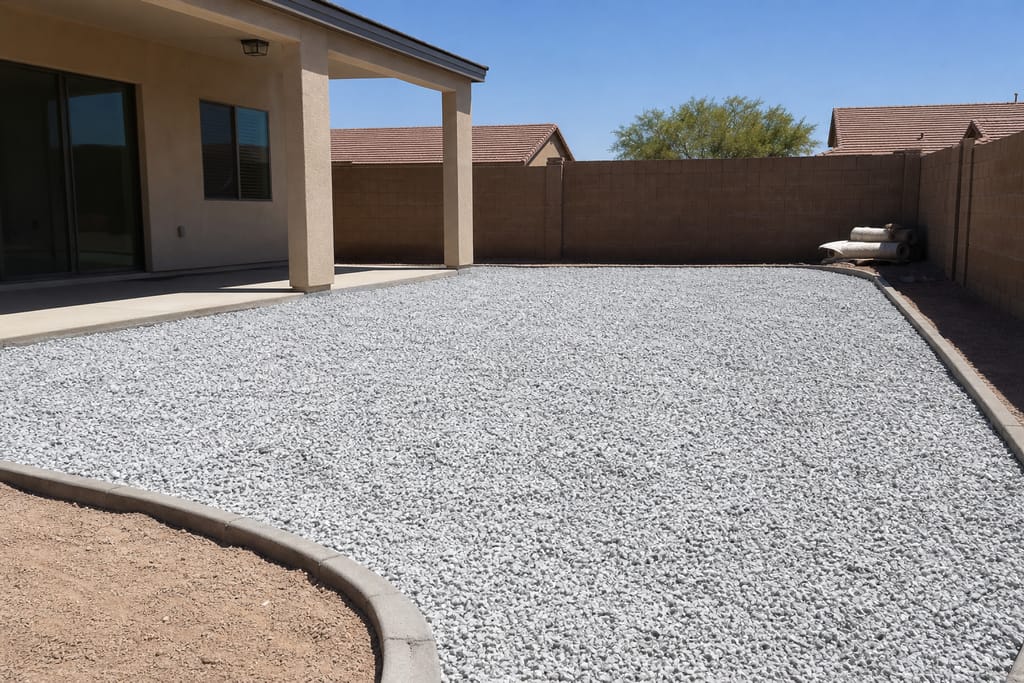 Step 3
Reflective base prep
Base materials are chosen to reduce heat retention beneath the turf surface.
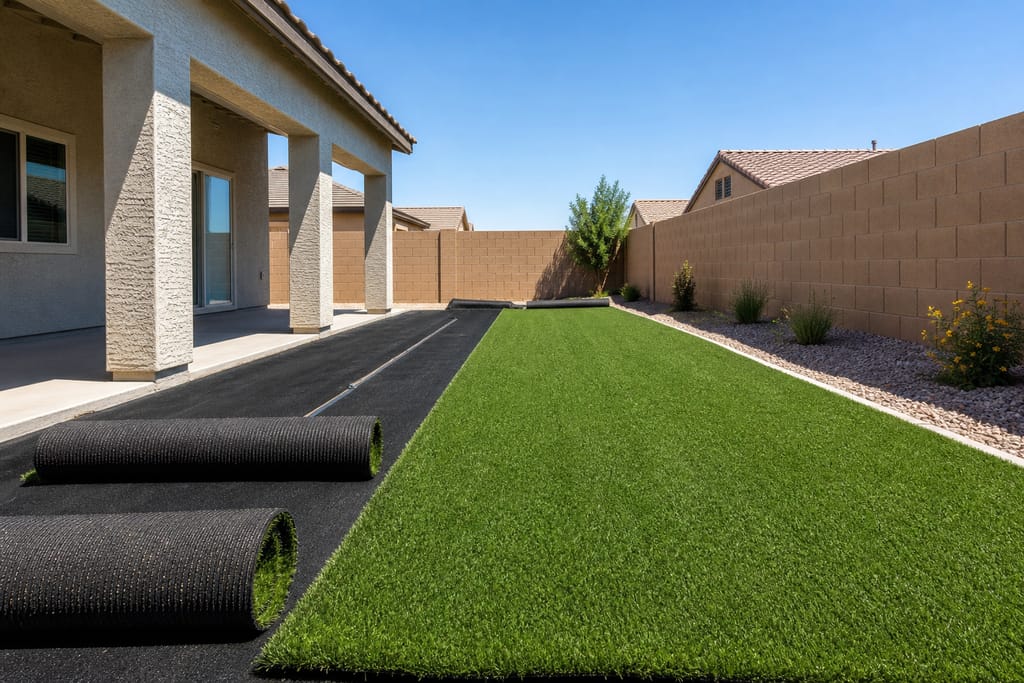 Step 4
Heat-resistant turf laying
Specialized desert turf fibers are installed to withstand extreme temperatures.
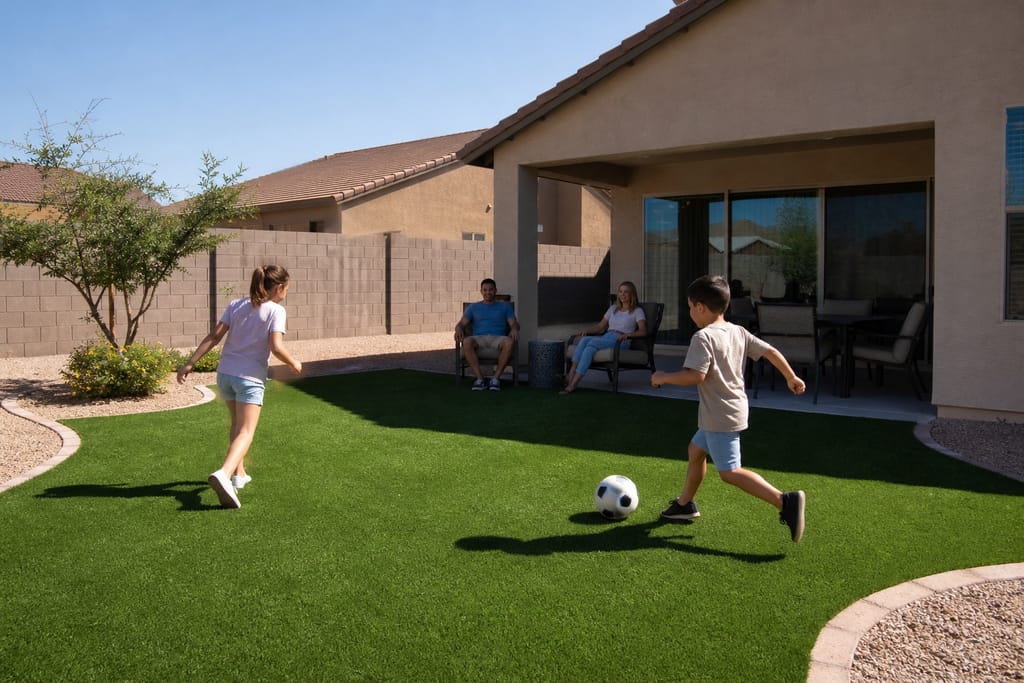 Step 5
Expansion gap allowance
Small gaps are built into seams to accommodate material expansion in heat.
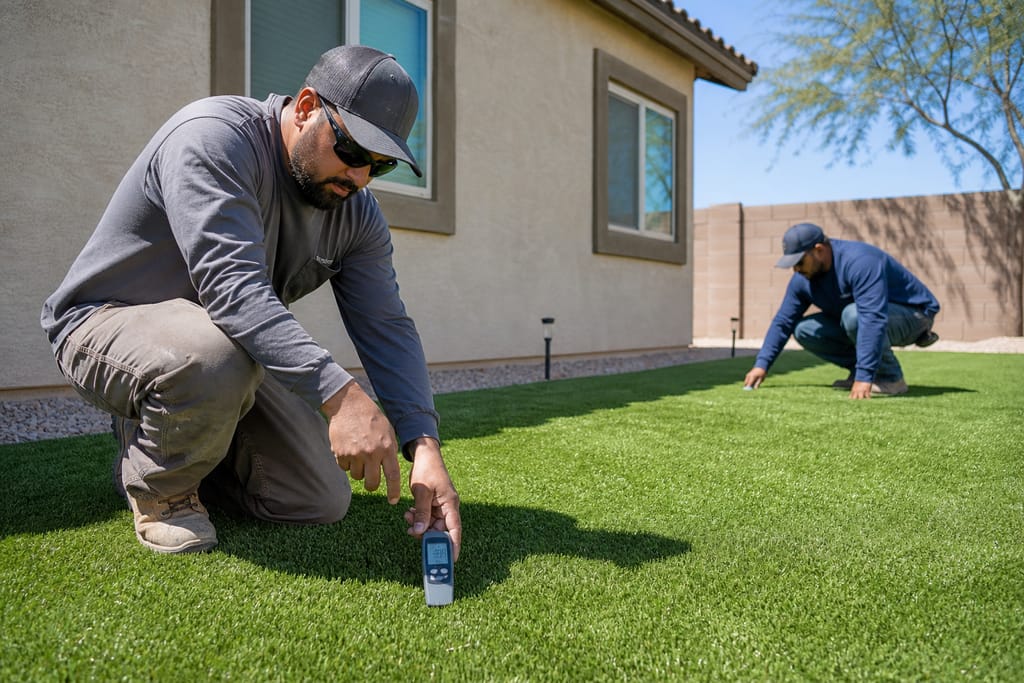 Step 6
Surface cooling check
The finished surface is tested for temperature performance under direct sun.
Materials
Materials and methods we use
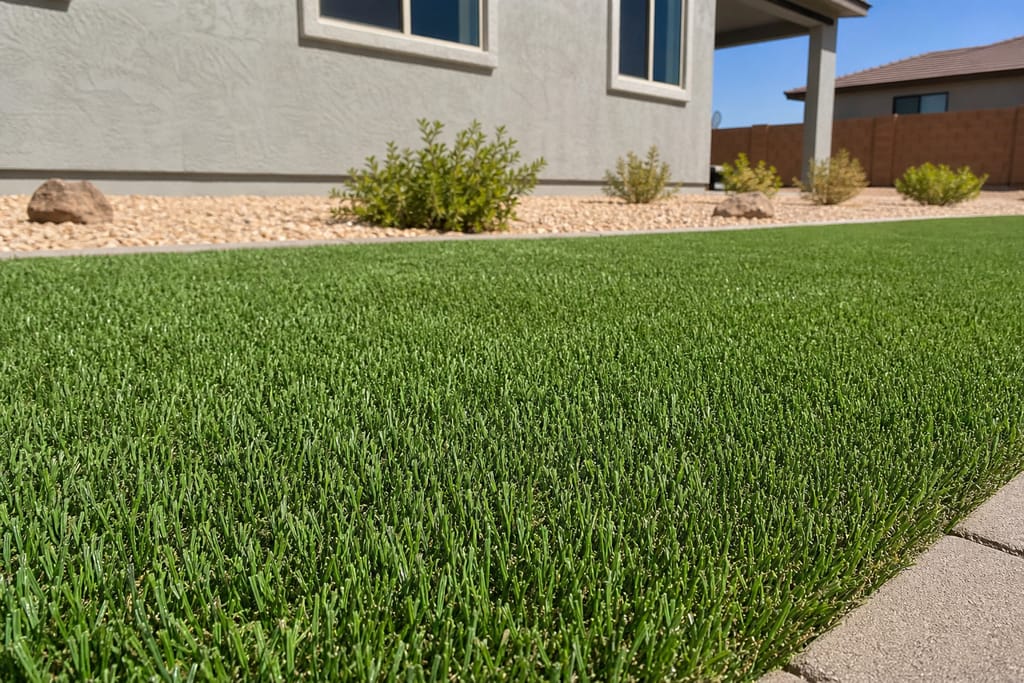
Heat-resistant turf fibers
Fibers engineered to resist melting and fading under intense desert sun.
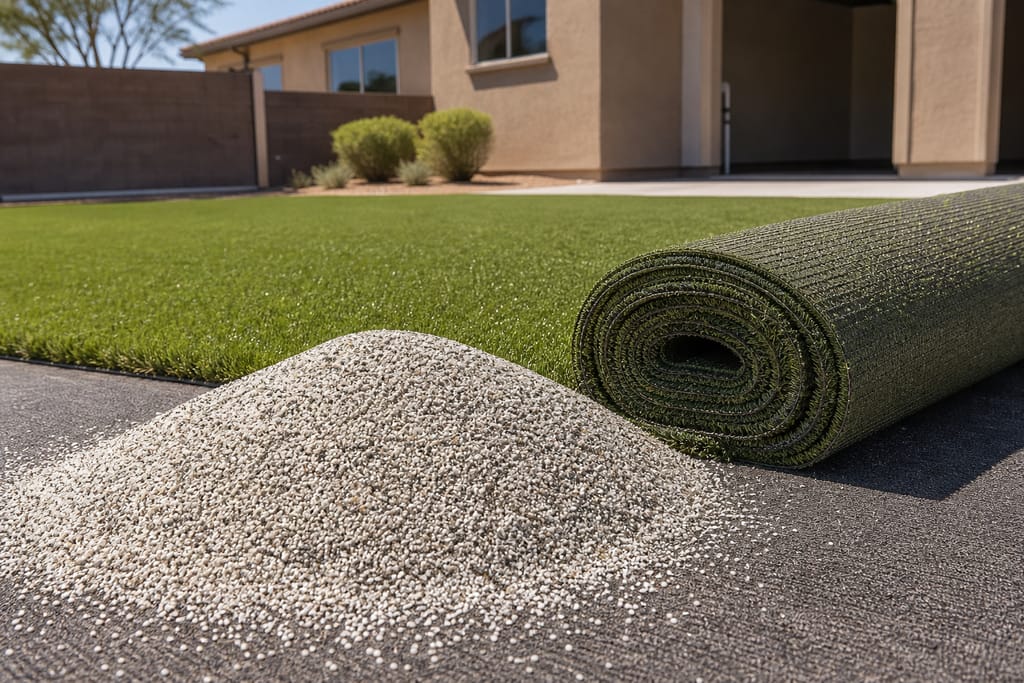
Reflective infill blend
Infill designed to reflect heat and reduce surface temperature buildup.
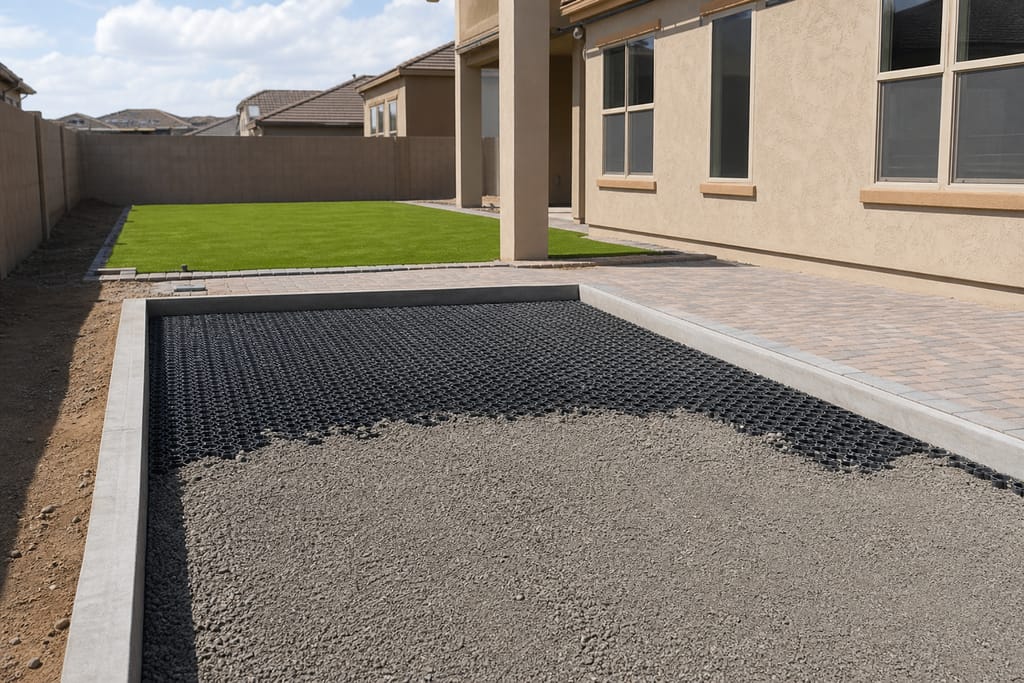
Drought-tolerant base layer
Base materials selected for stability in dry, low-moisture soil conditions.
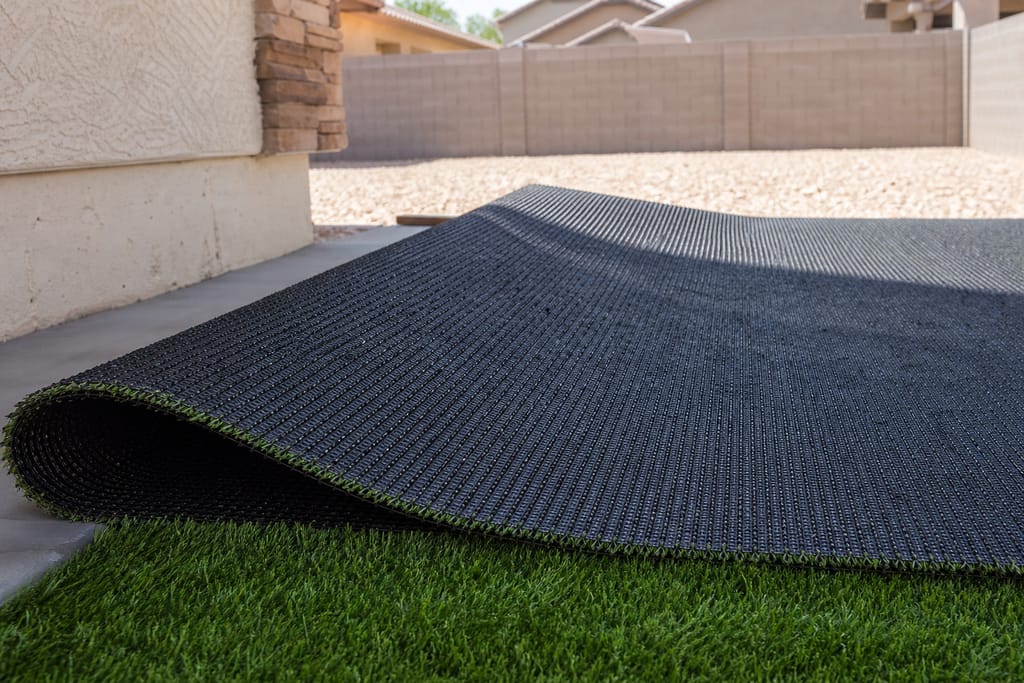
UV-protected backing
Backing treated with UV stabilizers to prevent cracking in high heat.
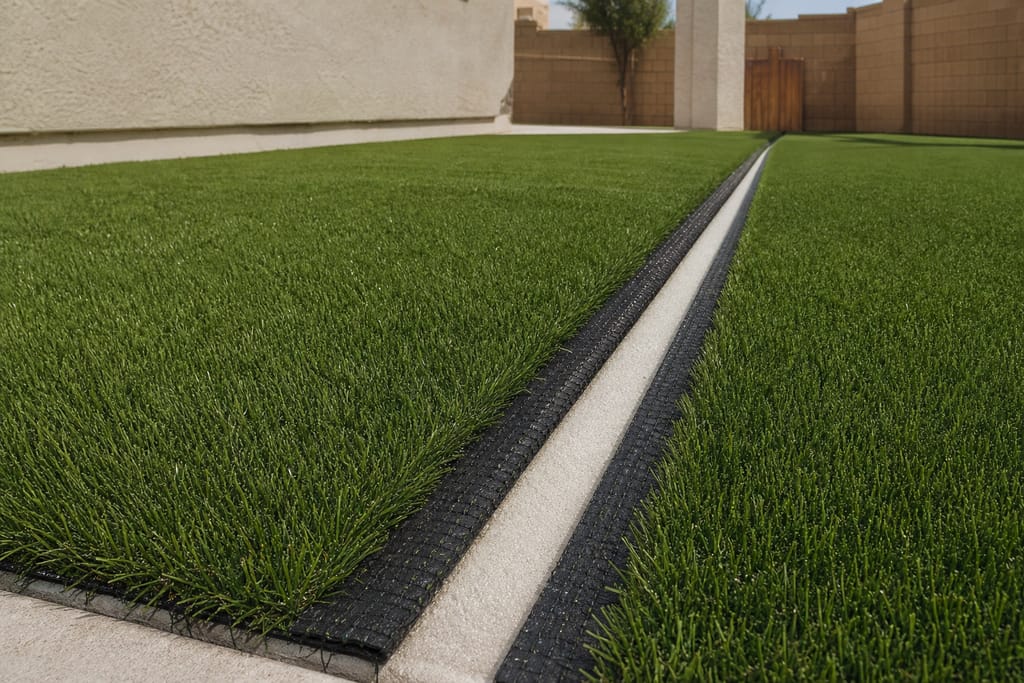
Thermal break seams
Seaming technique designed to handle material expansion from heat.
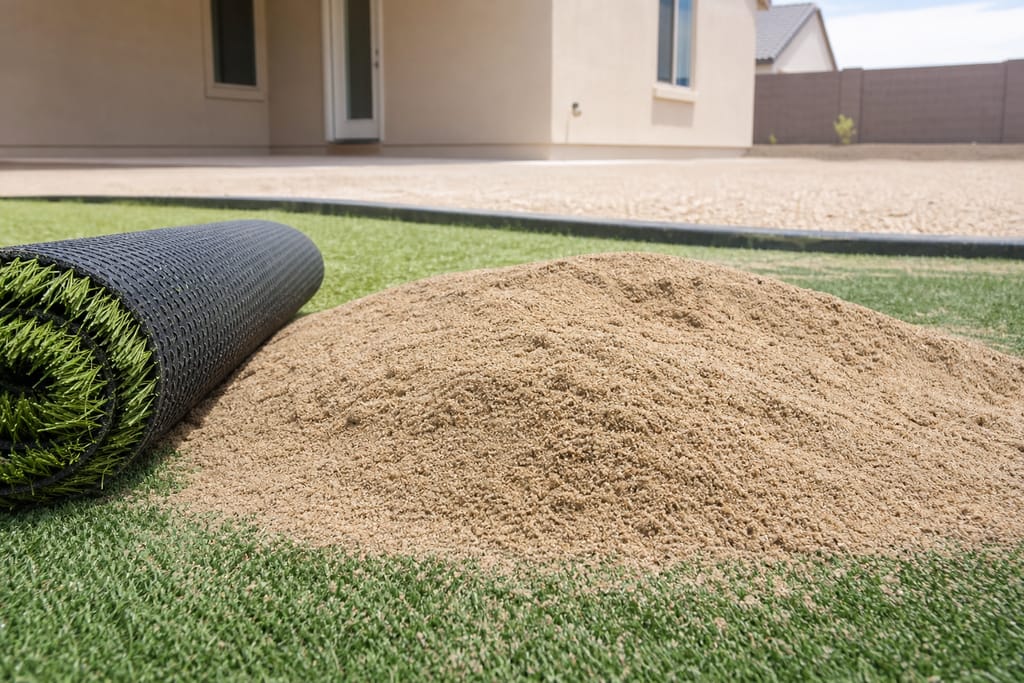
Sand-based filler
Sand filler provides stability while allowing heat dissipation.
Questions on materials?
Get a Free EstimateMore services
Other Artificial Turf services
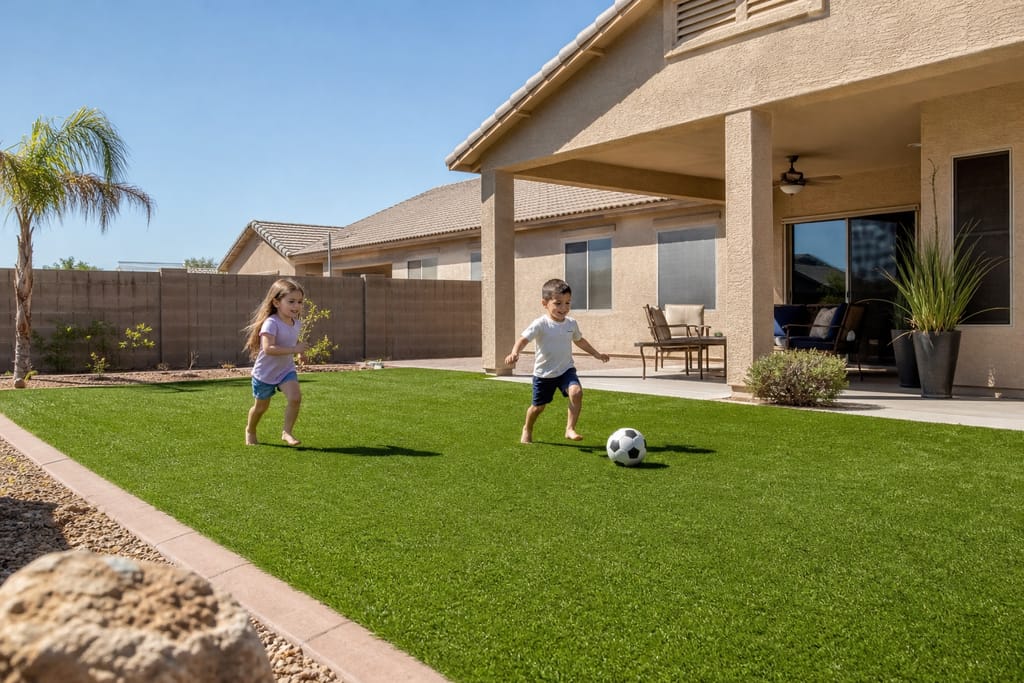
Artificial Turf Installation
Artificial turf installation in Casas Adobes with caliche-ready base prep, desert-grade turf, and free estimates on every yard.
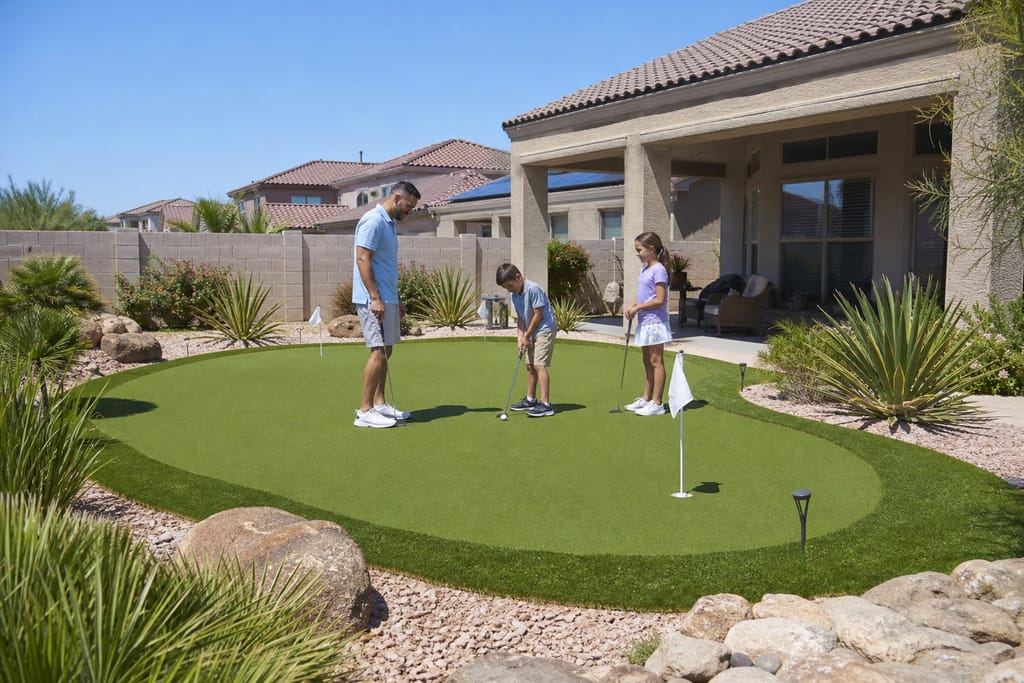
Putting Green Installation
Backyard putting green installation in Casas Adobes, AZ with contoured turf, cup placement, and free estimates on every project.
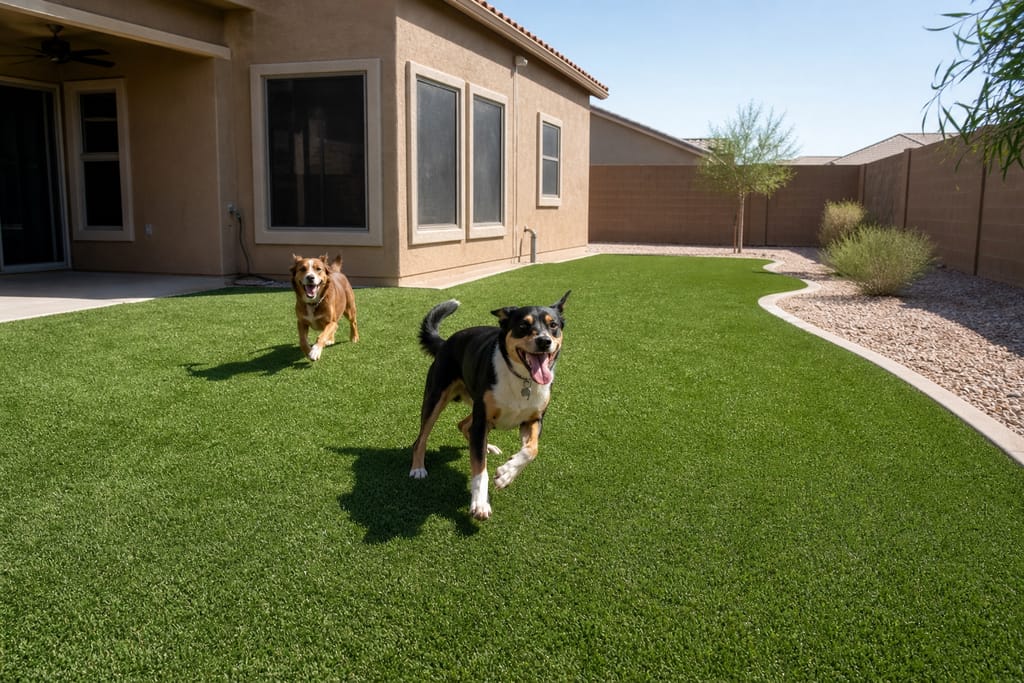
Pet Turf Installation
Pet turf installation in Casas Adobes, AZ with drainage-first base work and odor-control infill, plus free estimates on every project.
Ask about Desert-Adapted Turf Installs
Tell us about the project and how to reach you.